Verified installable Agent Skill
SKILL.md + .skillInstall into your agent.
npx skills add LearnPrompt/goodcaseai --skill poster-information-hierarchy --global --copy --yes --full-depthLoading…
Skill · Shared method
Turn the hero visual, headline, support copy, and layout constraints into a reusable poster frame.
Verified installable Agent Skill
SKILL.md + .skillnpx skills add LearnPrompt/goodcaseai --skill poster-information-hierarchy --global --copy --yes --full-depthMethod skeleton
Creator evidence
Case evidence
A refined editorial poster combining bold Chinese magazine typography with naive crayon-style drawings of Nanjing morning food and decorative motifs.
Prompt
Create a literary magazine cover style poster about {argument name="city greeting" default="Nanjing, good morning"}. Use a wide horizontal 16:9 canvas with a muted pale olive-green background and lots of quiet negative space. Place the main typographic weight in the upper-right: huge black Chinese calligraphic serif characters reading {argument name="main headline" default="南京,早安"}, thick, elegant, slightly oppressive like inked magazine masthead typography. Directly beneath the headline, add a thin horizontal rule on both sides of a small Chinese subtitle reading “城市清晨问候特辑”, and to the right add italic English text “Good Morning, Nanjing”. On the right-middle, set the date {argument name="date" default="2026.07.25"} in refined black serif numerals, with smaller Chinese text below: “星期六 农历六月十三”, then a tiny centered dash. Below that, create a compact almanac-style information block with a small red sun icon and the label “今日宜忌”, dotted divider lines, and exactly 2 circular badges: one labeled “宜” followed by “散心、看树、尝鲜”, and one labeled “忌” followed by “仓促、发呆过头、错过晨光”. At the bottom-right, add spaced small caps English “CITY MORNING GREETINGS”, a diagonal slash, and a small Chinese quote: “把日子过成诗 / 把清晨过成喜欢的样子”. In the lower-left, depict the theme object as naive crayon drawing rather than realism: exactly 2 illustrated food objects, a decorative handheld fan and a plate of sliced salted duck with orange egg-like centers. The fan should be ornate, rounded, outlined in dark green, filled with childlike swirls, flowers, cloud motifs, yellow, blue, white, and green crayon scribbles, with a brown handle and teal tassel. The plate should be a simple blue-outlined oval containing several thick slices of duck rendered with rough white, brown, orange, and red crayon strokes. Add small playful doodles around them: one red star, one green circle, one yellow squiggle, one tiny green vine flourish, three short white accent strokes, and a few small blue dash marks near the plate. Overall style: calm editorial cover, literary magazine layout, refined black typography contrasted with innocent wax-crayon illustration, minimal color palette, soft paper texture, no photorealism, no extra objects, no watermark.

Generate a premium square lifestyle portrait collage with five rounded monochrome panels and an overlapping full-color full-body subject.
Prompt
Create a stylish modern portrait collage featuring {argument name="character description" default="a young woman with long dark hair, fair skin, and an elegant calm expression"}. Use the same person consistently in every panel with identical facial features, hairstyle, skin tone, and identity. Canvas: square 1:1 portrait-collage poster with a clean white background and rounded outer margins. Layout: use exactly 5 rounded rectangular photo panels with soft white borders and a minimal editorial design: 1 wide horizontal panel across the top showing a close-up black-and-white portrait leaning against a tree; 1 large central-left full-body cutout overlapping multiple panels, in color, wearing {argument name="main outfit" default="a dusty rose pink linen button-up shirt with rolled sleeves, beige trousers, sunglasses, and a wristwatch"}, hands in pockets, outlined with a thick soft white sticker-like border; 1 mid-right rounded panel showing a black-and-white seated or three-quarter portrait with sunglasses and one hand under the chin; 1 lower-right rounded panel showing a black-and-white smiling close-up looking upward while wearing sunglasses; 1 bottom-right rounded panel showing a smaller black-and-white full-body walking pose with hands in pockets. Visual style: premium lifestyle photography collage, soft natural daylight, shallow depth of field, blurred outdoor park or tree-lined background, cinematic grayscale panels contrasted with the single color foreground figure, polished magazine aesthetic, realistic skin and hair detail, subtle shadows where the cutout overlaps the panels. Color treatment: all background panels are monochrome black and white, while the main overlapping full-body portrait remains in natural color with the shirt emphasized in {argument name="accent shirt color" default="dusty rose pink"}. Constraints: exactly 5 photo panels plus 1 overlapping color cutout of the same person, rounded corners on every panel, thick white gutters between panels, no text, no logos, no watermark, no extra people, keep the composition balanced and clean.

A refined campus fashion poster in a red, white, and blue color scheme, featuring dual-character styling, a soccer goal prop, and bold editorial typography.
Prompt
Create a clean fashion editorial campus poster featuring {argument name="character name" default="a young East Asian woman"} as two stylized versions of the same person in one studio composition. Use a vertical 4:5 canvas with a crisp white background and a solid deep red lower half like a graphic floor/backdrop. Place a small indoor soccer goal across the bottom foreground, with a black tubular frame and red netting, viewed straight on with slight depth. Put huge condensed bold blue sans-serif typography behind the subjects reading {argument name="headline text" default="Next Move"}, split so “Next” fills the left background and “Move” fills the right background, partially hidden behind the figures. Show exactly 2 character figures: the main full-size figure sits on the top bar of the soccer goal at center-right, facing forward with long legs angled down to the right, one hand resting on a black-and-white soccer ball beside her and the other hand on the goal bar; the smaller figure sits at lower-left on the goal bar, wearing black rectangular glasses, holding exactly 2 thin pointer sticks or batons, with a slightly playful school-club attitude. Both figures wear matching all-black campus-uniform inspired outfits: short-sleeve collared shirt with buttoned chest pockets, black necktie, slim black belt, pleated skirt, black ankle socks, and glossy black loafers. The main figure has {argument name="hair style" default="dark hair in a loose low updo with soft face-framing strands"}, pale natural skin, delicate makeup, and a calm confident expression. Use a red, white, and cobalt blue color palette with soccer elements, high-key studio lighting, sharp focus, polished magazine-poster retouching, playful but sophisticated composition, minimal shadows, no extra text, no watermark.

Sticker collage / creative image compositing / wallet / passport holder. Application introduction: This workflow can seamlessly blend patterns onto specified products. It is designed specifically for visual design tasks such as e-commerce product image generation, pattern mapping, and scene integration. It can intelligently fit user-provided pattern images onto the surface of product images, generating highly realistic composite images that meet commercial photography standards, suitable for product displays, advertising design, content creation, and many other scenarios. 1. Intelligent blending, natural and realistic Uses advanced visual models such as Gemini 3 Pro Image to achieve natural integration of lighting, material, and perspective between the pattern and the product surface, avoiding a “mapped-on” look. Supports multilayer image input (two-image/three-image modes), allowing multiple patterns and base colors to be integrated at the same time. 2. Multiple modes, flexible adaptation Two-image mode: pattern + product image Three-image mode: pattern 1 + pattern 2 + product image Single-image mode: product image only + scene description generation Unlimited image variation: generate diverse lifestyle scene images based on a single image 3. Batch generation, efficient output Built-in Repeater node supports one-click batch generation of multiple result images (default 4), improving image output efficiency. Output quantity, quality (1K/2K/4K), and aspect ratio (1:1, etc.) can be freely adjusted. 4. Prompt guidance, precise control Provides structured prompt templates. Users only need to make slight adjustments to control: pattern integration method (printed layer/sticker feel/embossed feel), scene description (airport, cafe, office setting, etc.), shooting style (commercial photography/lifestyle snapshot/high realism) 5. Plug and play, easy to use Preset node connections and parameters are already configured. Users only need to: upload images, fill in or select a prompt, and click generate. Built-in with many example images and prompt cases, so beginners can get started quickly. How to use: Step 1: Upload the product image and pattern image. Step 2: Fill in the prompt (default is available Step 3: Click generate. Many high-quality workflows on the homepage: ****s://****liblib.art/userpage/46987de339ac47e0965172f7ccd1b939/publish/workflow Workflow customization, model customization, optimization, teaching, error troubleshooting, one-on-one guidance WeChat: [omitted] If this workflow is not what you need, contact the creator to customize an exclusive workflow. Workflow page; for commercial use, also verify the base model, LoRA, nodes, and input materials. License: Not clearly stated on the original page, pending manual review
Prompt
Sticker collage / creative image compositing / wallet / passport holder Application introduction: This workflow can seamlessly blend patterns onto specified products. It is designed specifically for visual design tasks such as e-commerce product image generation, pattern mapping, and scene integration. It can intelligently fit user-provided pattern images onto the surface of product images, generating highly realistic composite images that meet commercial photography standards, suitable for product displays, advertising design, content creation, and many other scenarios. 1. Intelligent blending, natural and realistic Uses advanced visual models such as Gemini 3 Pro Image to achieve natural integration of lighting, material, and perspective between the pattern and the product surface, avoiding a “mapped-on” look. Supports multilayer image input (two-image/three-image modes), allowing multiple patterns and base colors to be integrated at the same time. 2. Multiple modes, flexible adaptation Two-image mode: pattern + product image Three-image mode: pattern 1 + pattern 2 + product image Single-image mode: product image only + scene description generation Unlimited image variation: generate diverse lifestyle scene images based on a single image 3. Batch generation, efficient output Built-in Repeater node supports one-click batch generation of multiple result images (default 4), improving image output efficiency. Output quantity, quality (1K/2K/4K), and aspect ratio (1:1, etc.) can be freely adjusted. 4. Prompt guidance, precise control Provides structured prompt templates. Users only need to make slight adjustments to control: pattern integration method (printed layer/sticker feel/embossed feel), scene description (airport, cafe, office setting, etc.), shooting style (commercial photography/lifestyle snapshot/high realism) 5. Plug and play, easy to use Preset node connections and parameters are already configured. Users only need to: upload images, fill in or select a prompt, and click generate. Built-in with many example images and prompt cases, so beginners can get started quickly. How to use: Step 1: Upload the product image and pattern image. Step 2: Fill in the prompt (default is available Step 3: Click generate. Many high-quality workflows on the homepage: ****s://****liblib.art/userpage/46987de339ac47e0965172f7ccd1b939/publish/workflow Workflow customization, model customization, optimization, teaching, error troubleshooting, one-on-one guidance WeChat: [omitted] If this workflow is not what you need, contact the creator to customize an exclusive workflow.

Workflow Introduction: This is a workflow for creating product posters with astonishingly good results. It can completely replicate your product and then reference the style of the background you want to use, combining the two to finally form a beautiful poster. In our work, we may encounter requirements to create posters and effect displays for a product. The most important thing to note in this requirement is that the product must not change and must blend very naturally with the background image. Of course, if you have advanced PS skills, you can certainly use PS for creation. However, PS is heavily dependent on materials, and if you are not very satisfied with the materials, you can use this workflow to draft your poster. Workflow Idea: First, process the product image by resizing it proportionally to a width of 1024, then cut out the product and create a mask for it. Next, perform …
Prompt
Workflow Introduction: This is a workflow for creating product posters with astonishingly good results. It can completely replicate your product and then reference the style of the background you want to use, combining the two to finally form a beautiful poster. In our work, we may encounter requirements to create posters and effect displays for a product. The most important thing to note in this requirement is that the product must not change and must blend very naturally with the background image. Of course, if you have advanced PS skills, you can certainly use PS for creation. However, PS is heavily dependent on materials, and if you are not very satisfied with the materials, you can use this workflow to draft your poster. Workflow Idea: First, process the product image by resizing it proportionally to a width of 1024, then cut out the product and create a mask for it. Next, perform prompt inversion on the reference image of the background style. Then use a combination of brushNET and contronet to blend the product image with the background prompts obtained from the inversion. By this step, the process is essentially complete. If you are satisfied with the output quality, you can stop the workflow here. To achieve commercial-level quality, I used FLUX to perform secondary sampling on the composite image. Then, I used IC Light to adjust the lighting and shadows of the product and background. Finally, I used FLUX with an upscaling model to enlarge the image to 2048, thus achieving commercial value. How to Use: It's very simple to use. From the perspective of running it once, you just need to upload two images: one product image and one background reference image, then click run. When uploading the product image, please ensure that there is only one product in the image and that the product image is of high quality. If using locally, please ensure you use the network scientifically to install nodes and models. If using online, please remember to reselect the model, as the location of models may vary across platforms. Test with sample images, and after running successfully, you can use your own product and background reference images, then fine-tune the parameters. First Group Final Effect Second Group Final Effect: Share Download 190 Download 5 13 Open AI App Launch on cloud Like Favorite Fellow Daoist, please stay 2025-06-01 Update Follow Posters Fellow Daoist, please stay 2025-06-01 Update Follow Workflow introduction Workflow Introduction: This is a workflow for creating product posters with astonishingly good results. It can completely replicate your product and then reference the style of the background you want to use, combining the two to finally form a beautiful poster. In our work, we may encounter requirements to create posters and effect displays for a product. The most important thing to note in this requirement is that the product must not change and must blend very naturally with the background image. Of course, if you have advanced PS skills, you can certainly use PS for creation. However, PS is heavily dependent on materials, and if you are not very satisfied with the materials, you can use this workflow to draft your poster. Workflow Idea: First, process the product image by resizing it proportionally to a width of 1024, then cut out the product and create a mask for it. Next, perform prompt inversion on the reference image of the background style. Then use a combination of brushNET and contronet to blend the product image with the background prompts obtained from the inversion. By this step, the process is essentially complete. If you are satisfied with the output quality, you can stop the workflow here. To achieve commercial-level quality, I used FLUX to perform secondary sampling on the composite image. Then, I used IC Light to adjust the lighting and shadows of the product and background. Finally, I used FLUX with an upscaling model to enlarge the image to 2048, thus achieving commercial value. How to U

Workflow Introduction] First, this workflow needs to input the prompt word of the image you want to generate, then send it to the sampler after scheduling through the prompt word, and finally connect it with the text layout image to generate four posters. [Usage scenario] With a paragraph of text, you can quickly generate autumn harvest theme posters, which is convenient and fast. [Key nodes] FLUX model [Model version] FLUX Model name: flux1-dev-fp8-Comfy-Org.safetensors [LoRA model] Model name: Mini Farm_1.0LoRA.safetensors [ControlNet application] None [K sampler] Sampling method: euler Share Download 72 Download 1 2 Launch on cloud Like Favorite Isabella 2024-10-15 Update Follow Posters Holiday Themes Isabella 2024-10-15 Update Follow Workflow introduction Workflow name: Golden Autumn Harvest Poster [Workflow Introduction] First, this workflow needs to input the prompt word of the im…
Prompt
Workflow Introduction] First, this workflow needs to input the prompt word of the image you want to generate, then send it to the sampler after scheduling through the prompt word, and finally connect it with the text layout image to generate four posters. [Usage scenario] With a paragraph of text, you can quickly generate autumn harvest theme posters, which is convenient and fast. [Key nodes] FLUX model [Model version] FLUX Model name: flux1-dev-fp8-Comfy-Org.safetensors [LoRA model] Model name: Mini Farm_1.0LoRA.safetensors [ControlNet application] None [K sampler] Sampling method: euler Share Download 72 Download 1 2 Launch on cloud Like Favorite Isabella 2024-10-15 Update Follow Posters Holiday Themes Isabella 2024-10-15 Update Follow Workflow introduction Workflow name: Golden Autumn Harvest Poster [Workflow Introduction] First, this workflow needs to input the prompt word of the image you want to generate, then send it to the sampler after scheduling through the prompt word, and finally connect it with the text layout image to generate four posters. [Usage scenario] With a paragraph of text, you can quickly generate autumn harvest theme posters, which is convenient and fast. [Key nodes] FLUX model [Model version] FLUX Model name: flux1-dev-fp8-Comfy-Org.safetensors [LoRA model] Model name: Mini Farm_1.0LoRA.safetensors [ControlNet application] None [K sampler] Sampling method: euler

A refined editorial poster prompt designed for Nano Banana Pro, using oversized typography as a scene window to show the subject performing a specific task.
Prompt
Create a 9:16 editorial poster in the HUMAN FRAGMENTS visual system. Theme: [{argument name="theme" default="football / badminton / jump rope / floral design"}] Subject: [person, age, gender, appearance] Action: [specific movement or task] Scene: [location and environment] Title: [{argument name="title" default="custom two-word title"}] Supporting line: [{argument name="subtitle" default="one short phrase"}] Year: 2026 Use oversized cropped typography as the main composition structure. The letters should act like windows that reveal the surrounding scene, such as the sky, court, buildings, flowers, studio, or ground. Keep the main person visually complete in front of the typography. Do not let the letters cut through the face, torso, thighs, or other important body parts. Let one key action element break beyond the letterforms to create depth: - a football and shoe close to the camera - a badminton racket and shuttlecock - a jump rope forming a large arc - a bouquet, stems, leaves, or hands extending across the type The person, typography, and environment must feel like one continuous composition, not a photo placed beside typography.

A high-contrast monochrome magazine cover prompt that preserves facial identity from a reference image with bold typography.
Prompt
Create a premium black and white editorial poster using the uploaded image as the exact facial reference. Preserve the person’s identity, facial features, hairstyle, skin tone, and face shape accurately. Position the subject in a confident three-quarter side profile, looking slightly left, wearing {argument name="accessories" default="round black sunglasses"}, a {argument name="outerwear" default="black denim jacket"} over a plain white crew-neck T-shirt, with a calm, confident expression. The background is a deep matte black studio backdrop featuring the giant word “{argument name="background text" default="SNOW"}” in massive bold condensed white typography spanning nearly the entire canvas behind the subject. The letters should be partially hidden by the person’s head and shoulders to create depth and a premium magazine-cover aesthetic. Place the smaller text “SNOW” centered at the top in clean uppercase white typography with quotation marks. High-contrast monochrome grading, dramatic studio lighting, sharp jawline highlights, crisp hair texture, luxury fashion campaign style, minimalist composition, ultra-realistic skin details, subtle film grain, razor-sharp focus, shallow depth of field, premium typography layout, modern streetwear editorial, Vogue meets GQ aesthetic, cinematic 8K, IMAX quality, photorealistic, square 1:1 composition.

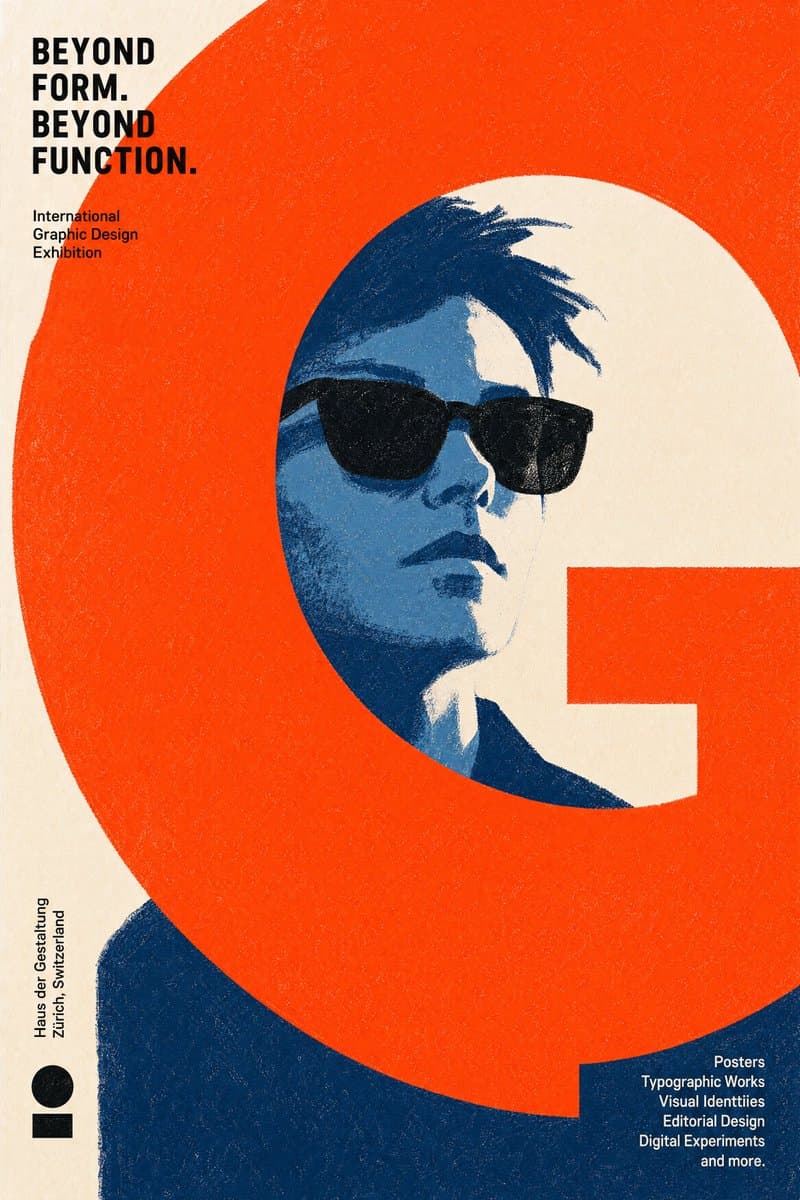
Generate a minimalist editorial-style key visual poster with bold condensed typography, print crop marks, and a black-and-Klein-blue print-system aesthetic.
Prompt
Create a minimalist editorial landing-page hero poster on an off-white coated-paper background with subtle dust speckles and scanned paper grain. Center a single vertical rectangular print sheet slightly above the middle of a wide landscape canvas, leaving large empty margins. The sheet has a thin imperfect black ink border with a slightly rough printed texture, plus four small Klein-blue crop/corner registration marks just outside the rectangle, and one small blue circular registration target centered on the top border. Inside the sheet, use stark condensed bold uppercase typography like a printed production document: a tiny tracking-spaced eyebrow at the top reading {argument name="eyebrow text" default="A FILM & AI IMAGE PROMPT WORKBENCH"}, then a large stacked headline in black reading {argument name="main headline" default="SAY THE PICTURE IN YOUR HEAD."} across five tight lines, followed by the final word in vivid Klein blue reading {argument name="accent word" default="CLEARLY."}. Add a tiny tracking-spaced caption beneath the headline reading {argument name="caption text" default="THE PICTURE, PULLED INTO REGISTER."}. At the very bottom center of the canvas, far below the poster, add a thin vertical black line and tiny uppercase text reading {argument name="bottom label" default="SCROLL"}. Use only three colors: warm paper white, black ink, and intense Klein blue. Keep all corners square, no rounded UI elements, no shadows, no gradients, no illustrations, no photos, no extra text.

A professional business prompt designed to generate 8 diverse commercial poster options for a single product, ensuring brand consistency while exploring different themes and angles.
Prompt
Based on this product image, generate 8 product poster concepts in different styles. Product name: [{argument name="产品名称" default="Fill in product name"}] Use case: [{argument name="使用场景" default="Fill in product use"}] Output quantity: {argument name="输出数量" default="8 images"} Aspect ratio: 3:4 Platform: [Xiaohongshu / Taobao / WeChat official account / Douyin image-text post] Requirements: 1. Keep the product’s appearance, packaging, colors, and core identifying features accurate 2. Each image should use a different scene atmosphere, composition method, and visual style 3. Each image should look like an independently completed commercial poster, not a simple background swap 4. Suitable for recommendation-driven sharing, with a clear visual focus and atmosphere Possible style directions include: Minimal white, camping style, Japanese style, dark textured look, fresh summer style, artistic vintage, breakfast scene, lifestyle feel Visual requirements: Different product placement angles Different scene pairings Different lighting atmospheres Different composition rhythms High overall finish, suitable for direct use in e-commerce proposals or social media display

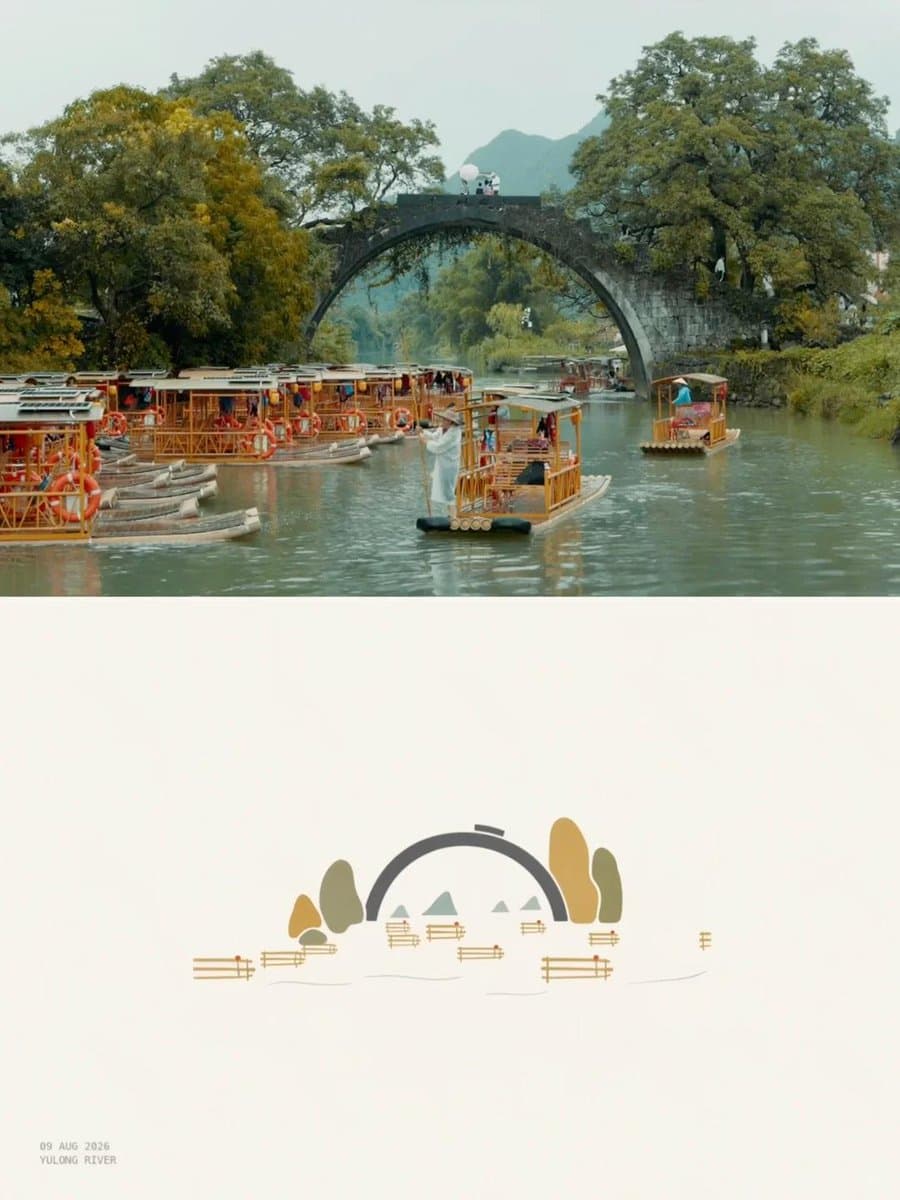
A creative prompt for generating city-themed morning posters with a fresh Japanese aesthetic, featuring culture-specific elements and a multi-grid layout for different hues.
Prompt
Theme: {argument name="City Characteristics" default="city-specific cultural elements"}+good morning greeting+{argument name="Date" default="2026-07-24"}+today's quote A total of {argument name="Number of Cities" default="10"} different cities, with each city as an independent beautiful image Japanese-style fresh, literary color palette Aspect ratio 16:9 For each image, use different color logic and compositional variation, so the hue feels distinctly different at a glance

A vertical classroom-style infographic that explains why the sky is blue and why sunsets are red through Rayleigh scattering diagrams, formulas, and fact cards.
Prompt
Goal: Create a tall single-page educational science infographic explaining {argument name="headline text" default="WHY THE SKY IS BLUE — AND SUNSETS ARE RED"} with the subtitle {argument name="subtitle text" default="Rayleigh scattering explained in one page"}. Use a clean flat-design science-magazine look, suitable for a classroom handout. Canvas: Vertical 9:16 poster on an off-white background, framed by black horizontal bars at the very top and bottom. Center the white text “GPT Image 2” inside each black bar. Main infographic area has generous margins, thin navy divider lines, rounded cards, and a navy/teal/coral/yellow palette. Layout: Use exactly 5 numbered sections, each marked by a dark navy circular badge with white numbers 1 through 5 on the left. Keep all typography geometric sans-serif, with bold uppercase navy headings and teal italic subtitle. Section 1 — Visible Light Spectrum: Heading reads “VISIBLE LIGHT SPECTRUM”. Show one long rounded horizontal rainbow gradient bar from violet/blue at left through cyan, green, yellow, orange, and red at right. Add exactly 4 wavelength labels beneath it: “400 nm”, “500 nm”, “600 nm”, and “700 nm”, with small tick marks. Section 2 — Sunlight Entering the Atmosphere: Heading reads “SUNLIGHT ENTERING THE ATMOSPHERE”. Draw a large stylized yellow sun on the left, Earth’s curved edge on the right, and a pale blue atmospheric band between them filled with many small blue air-molecule dots. Show exactly 4 blue horizontal light rays entering and scattering with small blue arrows, plus exactly 3 red horizontal rays passing straight through toward Earth. Include exactly 6 larger molecule/star scattering icons in the atmosphere. Add two explanatory captions below the rays: “Blue light: scattered ~5.5x more” in blue and “Red light: passes through” in red. Section 3 — Formula and Bar Chart: Create two rounded rectangular cards side by side. Left card shows the large equation “I ∝ 1/λ⁴” and the caption “Scattering intensity is inversely proportional to the fourth power of wavelength”. Right card title reads “RELATIVE SCATTERING (450 nm vs 650 nm)”. Include a simple bar chart with exactly 2 bars: a tall blue bar labeled “450 nm” and a shorter red-orange bar labeled “650 nm”, y-axis labeled “Relative scattering”, and large text “≈ 4.4 : 1” on the right. Section 4 — Noon vs Sunset: Make two large circular/oval diagrams side by side. Left diagram title: “NOON — short path through atmosphere”. It shows a small sun above a curved Earth horizon, a tiny black human silhouette at ground level, blue dots in the sky, and vertical red and blue rays passing through a short atmospheric path with blue scattering arrows. Right diagram title: “SUNSET — long path”. It shows a low sun near the horizon on the left, a long horizontal path through a pale blue atmosphere over curved Earth, blue light scattering away along the path, a red ray continuing to a black human silhouette at the right, and the caption “Blue is scattered away before reaching your eye”. Section 5 — Facts: Create exactly 3 rounded fact cards in a row. Card 1 has a simple outlined Mars-like planet icon and text “Fact: Mars sunsets are blue”. Card 2 has a teal ocean wave icon and text “Fact: The ocean is blue for a different reason”. Card 3 has a purple eye icon with rays and text “Fact: Violet scatters most, but our eyes favor blue”. Footer: Add small centered source text: “Sources: Rayleigh (1871) · Illustration for classroom use · Fig. 1 of 1”. Visual style: Flat vector illustration, thin navy outlines, soft gradients only where needed, crisp readable labels, science textbook clarity, no photorealism except the Earth texture may be lightly detailed. Keep spacing balanced and ensure every label is legible.