

加载中…
创作者 · harboriis
查看原始来源 ↗Premium Editorial Poster Instructions
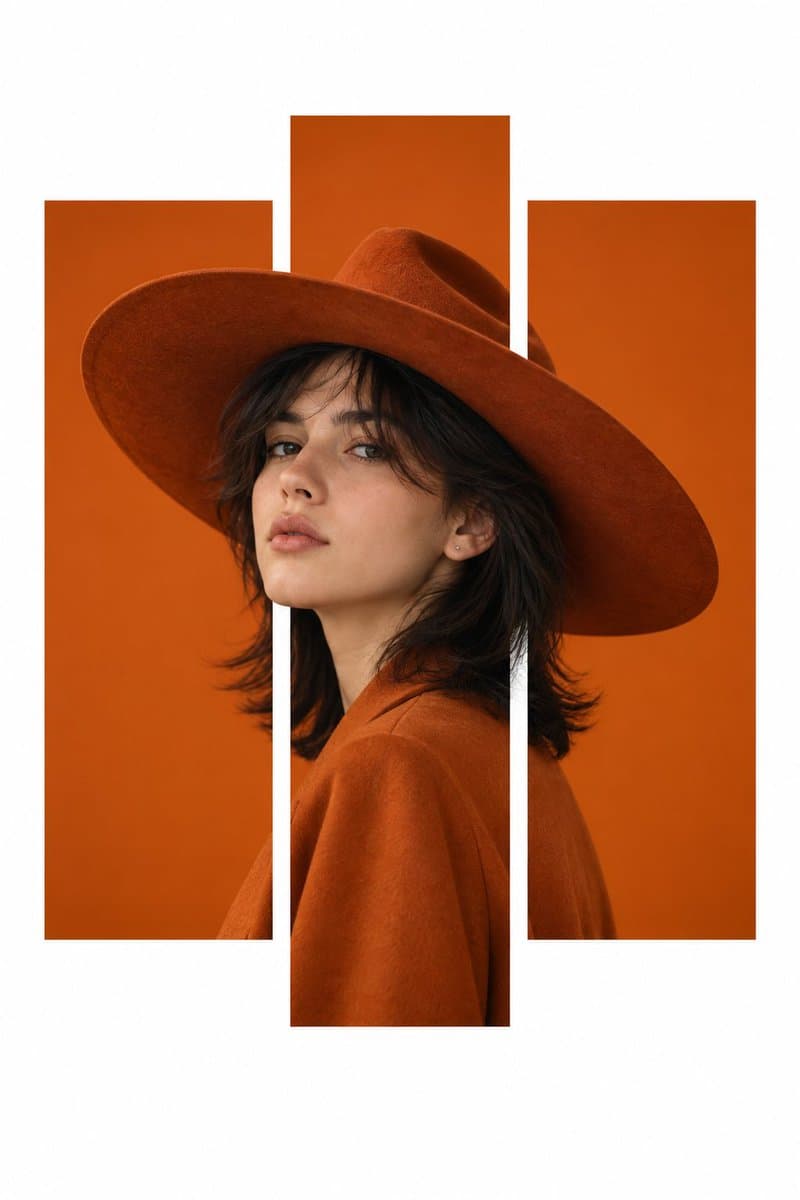
Each uploaded photo must be made into a separate, independent, premium editorial poster, and multiple photos must not be combined. Use a strict 3:4 vertical canvas. Split the canvas horizontally in the exact center: the upper half and the lower half each occupy 50% of the height, are equally wide, and equally high, with no alteration of proportion.
The upper half uses the original photo directly and must not be regenerated. Preserve the identity of the main subject, the human body or architectural structure, proportions, perspective, spatial relationships, texture, natural light and shadow, color, and environment in their entirety. Only slight cropping and restrained premium color grading are permitted; re-drawing the main subject, fictional light, HDR, excessive saturation, plastic texture, and fictional content are prohibited. When needing to adapt to the frame, only environmental areas such as sky, water surface, ground, walls, plants, or background can be extended.
The lower half extracts and reconstructs the "narrative core" of the photo: it can be a single primary subject, or a group of related elements that together embody the photo's identity, scale, action, o story relationship. Maintain its realistic, recognizable appearance, proportion, internal structure, texture, and relative position. Do not remove important related elements, and do not directly use rectangular photo cutouts. The reconstructed subject typically occupies 55%-80% of the width of the lower area. It should naturally extend based on the photo's primary direction and retain plausible ground, water lines, shadows, or softly dissipated edges to integrate into the background, avoiding a sticker-like or floating appearance.
Incorporate a narrow, low-saturation geometric color field behind or through the center of the subject, serving as a "critical window" between reality and editorial abstraction. The color of the window must be extracted from the original photo, and its orientation (horizontal, vertical, or diagonal) chosen based on the overall narrative direction.
The subject must actively pass through the window: part of it is within the color field, and part enters the open negative space, naturally crossing the window's boundary to create occlusion, penetration, and spatial depth. The window is not a frame or a card; it must not fully enclose the subject. Only one primary window is allowed; multiple color blocks, thick borders, rounded corners, strong gradients, and drop shadows are prohibited.
Use a white, cool white, very light gray, or near-white background for the lower half, coordinated with the photo. Employ a restrained asymmetrical composition and abundant negative space to establish a three-tier hierarchy:
Reconstructed subject or narrative composition
Low-saturation geometric window适用模型与稳定度
建议模型
继续探索

ChatGPT 上的 GPT Image 2.5 提示词:为每张上传的照片制作一张独立的高端杂志风格海报。绝不要合并照片。格式 严格采用 3:4 竖版构…
提示语
为每张上传的照片制作一张独立的高端杂志风格海报。绝不要合并照片。 格式 严格采用 3:4 竖版构图,以水平分界线精确划分为 50/50 两部分。上下两半必须等高,并在视觉上连成一张精致的杂志封面。 上半部分:原始照片 忠实使用原始照片。保留主体、身份、面部特征、比例、姿势、服装、物品、构图、光线、阴影、氛围和色彩情绪。保持完全写实,仅进行细微的高端杂志风格调色。绝不要将主体风格化、扭曲、替换或改动。仅在必要时延展周围背景,衔接要无缝、自然。 下半部分:手绘插画 将同一场
提示语
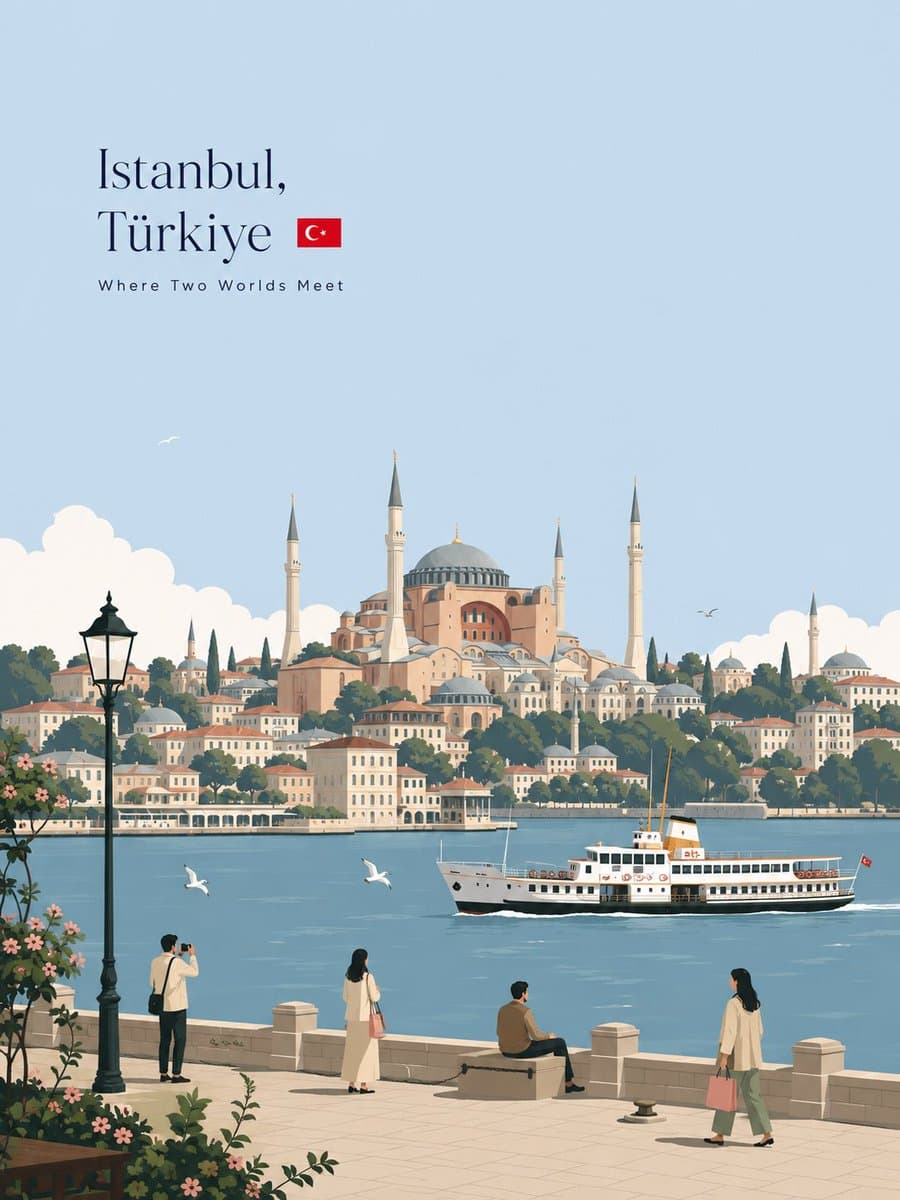
为 {argument name="city name" default="London"} 设计一张高端极简 flat-vector 旅行海报,3:4 vertical format。 设计一张原创、精致的旅行海报,捕捉 {argument name="city name" default="London"} 真实的视觉个性。构图必须让人感到是为这座城市量身打造,而非套用可重复使用的模板。 CITY IDENTITY 首先解读 {argument name="city
GPT image 2.5。Prompt:一张精致的极简生活方式艺术海报,以 [PERSON / SUBJECT / MOMENT] 为视觉中心,将真实生活照片转化为…
提示语
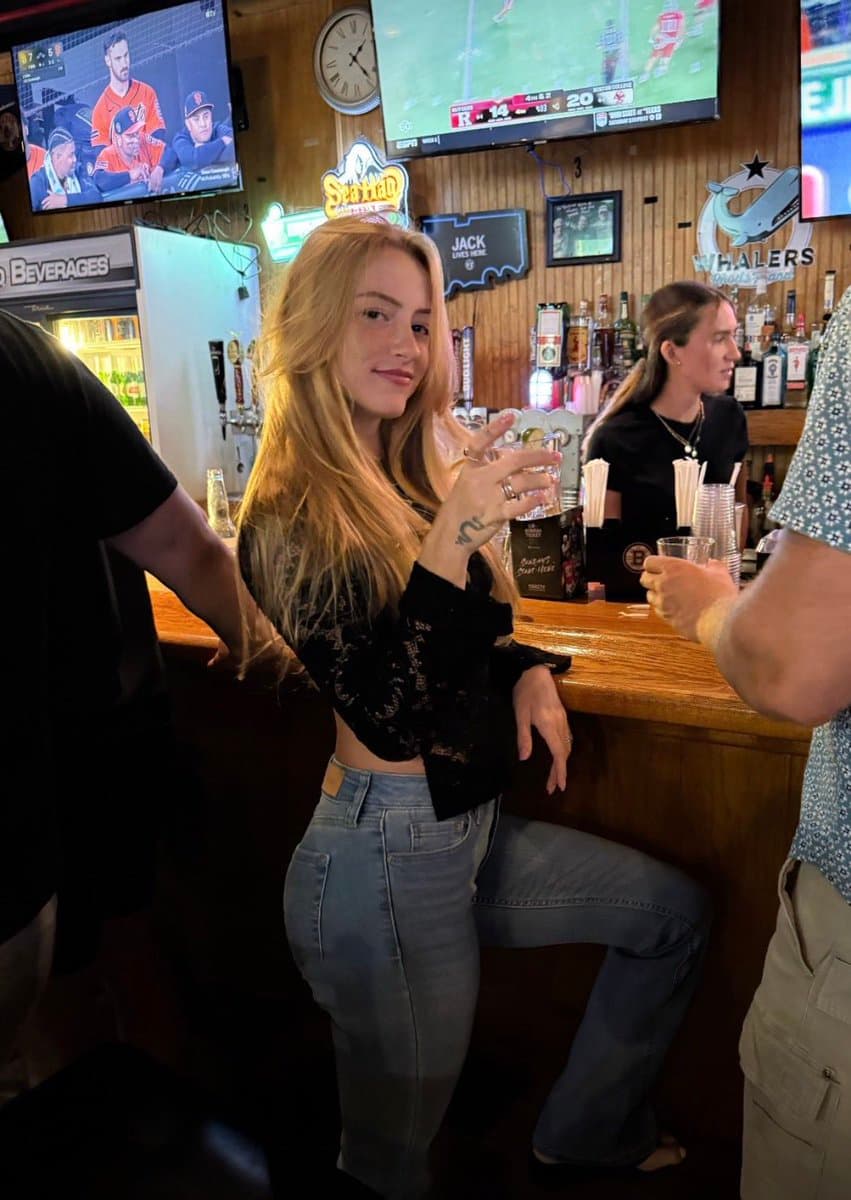
一张精致的极简生活方式艺术海报,以 [PERSON / SUBJECT / MOMENT] 为视觉中心,将真实生活照片转化为考究的手绘编辑插画。保留主体可辨识的姿势、轮廓、服装、发型和关键视觉细节,同时将场景简化为优雅的艺术构图。 使用受原始环境启发的有限复古色板,以暖调柔和色彩印制在象牙色/灰白色纸张背景上。结合精细的墨线轮廓、松弛的速写笔触、细密排线、微妙的网点纹理、褪色印刷瑕疵和柔和的水彩般晕染。 将周围环境精简为少量可辨识的情境元素——[CAFÉ / BAR /
Case 详情页把原帖效果、Prompt 与复测证据放在同一条阅读路径里。