Loading…
Creator · xiaoxiaodong01
View original source ↗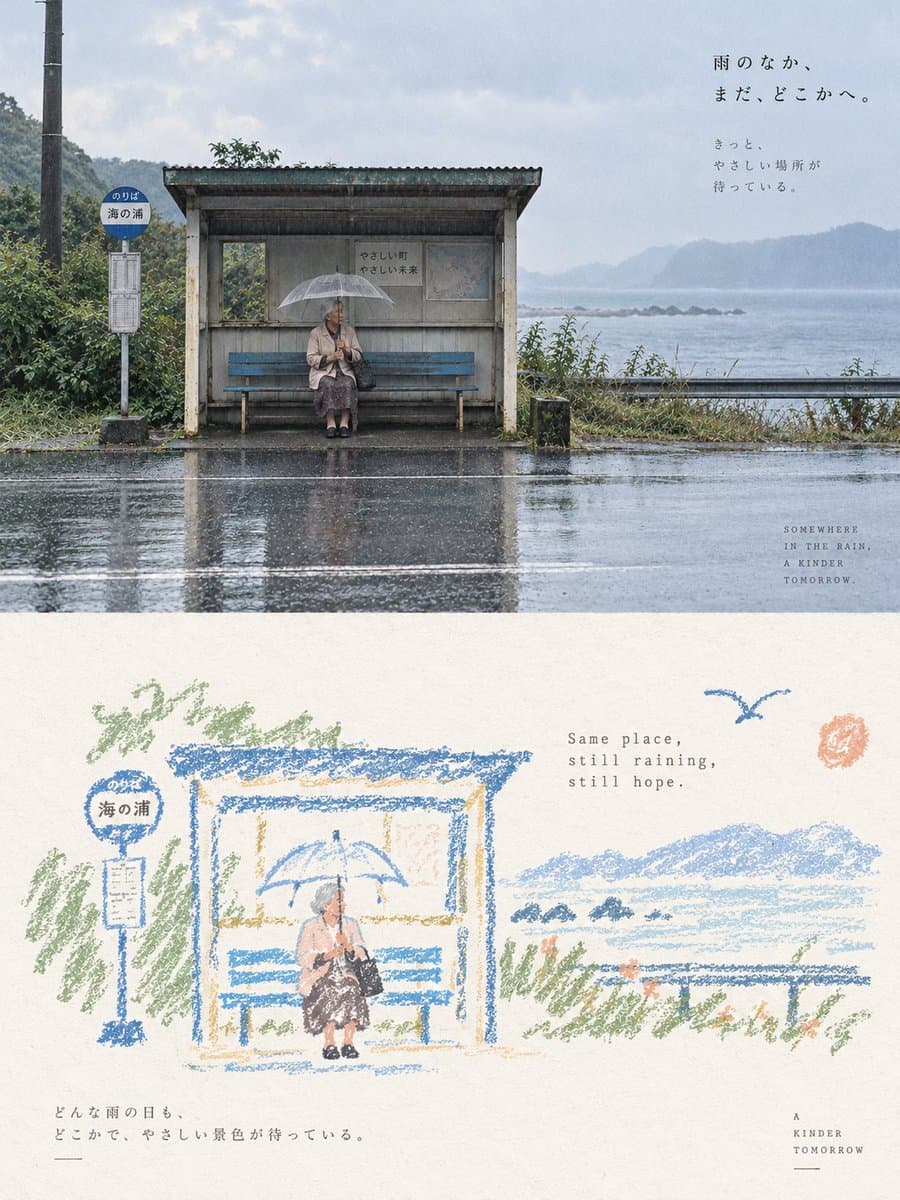
Prompt
Turn each photo I upload into a separate, premium-designed poster. Do not combine multiple images; output each photo individually. Use an overall {argument name="Composition Ratio" default="3:4 vertical composition"}, with the upper and lower sections in a strict 1:1 height ratio, each occupying 50% of the image.

Retain the original photo in the upper section, preserving the subject’s identity, structure, pose, realistic texture, natural lighting, and original color atmosphere. Apply only subtle, refined color grading to give it the visual quality of an art magazine, independent publication, or exhibition image. The surrounding environment may be extended naturally to fit the canvas, but the subject must not be stretched, distorted, or altered.

For the lower section, first understand the original photo’s most memorable **core theme, relationships between subjects, structural flow, emotion, and visual metaphors**, then reconstruct them as a **{argument name="Illustration Style" default="pastel crayon doodle illustration with a vintage paper texture"}**. Do not copy every object in the photo or redraw all its contents in full. Retain only the outlines, poses, directions, and visual memory points that best represent the original. Use reduction, simplification, slight exaggeration, and recombination so viewers can immediately sense the connection with the photo above.

Render the subject with **coarse-grained chalk/crayon-style hand-drawn outlines**: slightly thick, loose, and dry lines with powdery grain, intermittent color loss, subtle wobble, and edges that do not fully close, with naturally blunt, rounded stroke ends. Add only a minimal amount of pastel color blocks, simple grids, stripes, dots, or casual scribbles inside the subject, using the least possible information to suggest structure without realistic volume or complete details.

Use **the same line language** for the small surrounding elements as for the subject, but compress them further into recognizable doodle symbols drawn with just one or a few strokes. Stars, flowers, plants, objects, environmental cues, and abstract symbols should all be simple, childlike, open, and not fully enclosed, primarily using single-line outlines with very little fill. Do not render them as polished icons, stickers, or standalone miniature illustrations.

Maintain a relationship between **a small, stamp-like motif and expansive negative space**. Arrange the composition freely according to the subject’s direction, proportions, and visual center of gravity; it may be off-center, aligned to an edge, suspended, or partially cropped. The subject and a very small number of doodle symbols should form a loose but clearly defined visual cluster, while the remaining space is intentionally left empty. **Negative space itself is a primary compositional element**, creating breathing room, distance, and pauses through contrasts between emptiness and substance, clustering and dispersion, large and small forms, and asymmetry. It is better to draw less than to fill the page.

The background must use a **very pale, bright, clean paper color**, such as cream white, ivory, light off-white, pale apricot white, extremely light gray-white, or a near-white paper tone intelligently matched to the overall color temperature of the original image. Retain only an extremely subtle paper fiber and grain texture. It must not lean brown, yellow, or gray, or appear aged. **The background must be noticeably brighter than the subject’s lines and color blocks, ensuring that all crayon outlines, small symbols, and text remain clearly visible and never blend into the background.**

Extract **{argument name="Color Extraction" default="2–4 of the freshest, most approachable colors that best represent the spirit of the image"}** from the photo above and remix them into bright, soft pastel crayon colors. These may naturally include peach pink, apricot orange, creamy yellow, mint green, sky blue, pale purple, and other light hues. For the subject’s lines, prioritize coral pink, soft blue, teal, warm orange, pale purple, or deeper creamy tones that stand out clearly from the background. Repeat these colors only sparingly in the small elements to create visual echoes. Maintain an overall contrast of **pale background + clear colored lines + a small amount of soft color blocking**, creating a bright, soothing, relaxed, and lived-in feel. Avoid dark or dull colors, muddy browns, overly muted Morandi palettes, low contrast, fluorescent colors, and a cheap candy-like look.

Use text sparingly, with no language restrictions. Freely derive short phrases or text fragments from the subject, action, emotion, memory, or metaphor. Use a **light, airy typewriter-style font with slightly uneven letter spacing and subtle vintage mechanical printing imperfections**. Use clear but unobtrusive gray-brown, soft black, dark blue-gray, or a dark color that echoes the subject, ensuring sufficient readability on the pale paper surface. Scatter the text naturally throughout the negative space, creating an editorial mix of text, subject, and doodles rather than using a fixed title template.

The overall image should present a premium, soothing visual composed of **an extremely pale paper surface, coarse-grained crayon outlines, minimal pastel fills, minimalist doodle symbols, a small-scale subject, and abundant artistic negative space**. The priority is to make the subject and small elements stand out clearly against the pale paper while maintaining a relaxed, innocent, gentle quality and a mature sense of editorial composition. Avoid dark kraft paper, dark brown backgrounds, low-contrast lines, backgrounds and subjects blending together, fine outlines, realistic redrawing, complex small icons, fully filled backgrounds, smooth vectors, a 3D look, and a commercial template aesthetic.Models & stability
Recommended models
Keep exploring
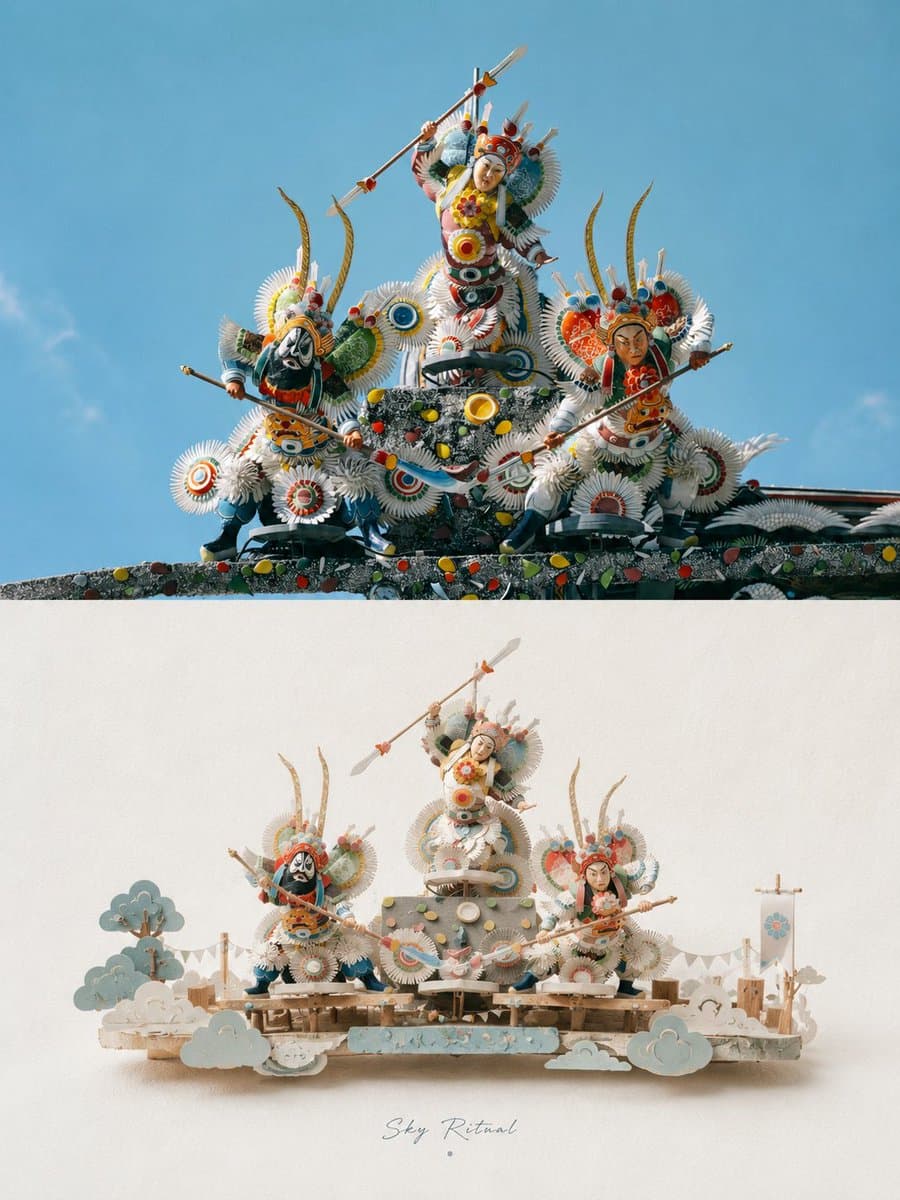
A refined prompt for transforming uploaded photos into premium vertical posters, featuring realistic photography in the upper half and a stylized 3D paper-craft miniature scene in the lower half.
Prompt
Please turn each photo I upload into a separate premium poster design. Do not create multi-image collages; output each photo individually. Use an overall 3:4 vertical composition, with the upper and lower sections in a strict 1:1 height rat
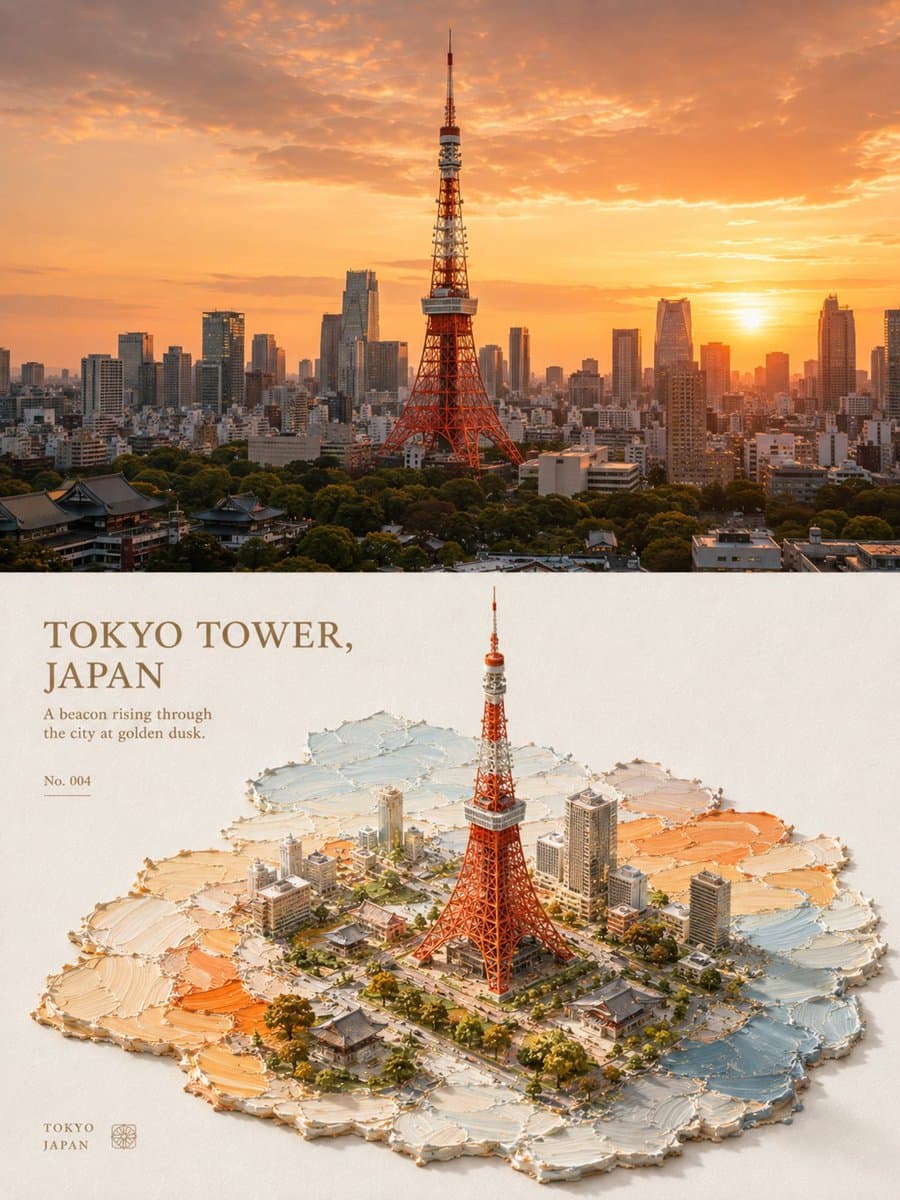
An aesthetic prompt that transforms photos into 3D isometric miniature landscapes using impasto oil painting and palette-knife techniques, creating a richly tactile, handcrafted texture on paper.
Prompt
Please turn each photo I upload into a separate premium design poster. Do not combine multiple images; output each photo individually. Use an overall 3:4 vertical composition, divided into upper and lower sections with a strict 1:1 height r

A detailed 3D CG render depicting an oriental fantasy girl with long mint-green hair, using high-quality PBR materials, with a dreamy garden background.
Prompt
9:16 vertical format, high-precision 3D CG oriental fantasy sweet-cool girl character poster, 3D CG oriental fantasy girl character portrait, anime-style 3D CG character art, semi-realistic 3D character render, full body portrait. The main