Verified installable Agent Skill
SKILL.md + .skillInstall into your agent.
npx skills add LearnPrompt/goodcaseai --skill web-3d-motion-hero --global --copy --yes --full-depthLoading…
Skill · Shared method
Build a motion-led hero around one visual subject, an interaction rhythm, and a clear performance budget.
Verified installable Agent Skill
SKILL.md + .skillnpx skills add LearnPrompt/goodcaseai --skill web-3d-motion-hero --global --copy --yes --full-depthMethod skeleton
Creator evidence
Case evidence
A webpage case by @johannesasgeir made with Gemini AntiGravity, including the public result, full prompt, and original source.
Prompt
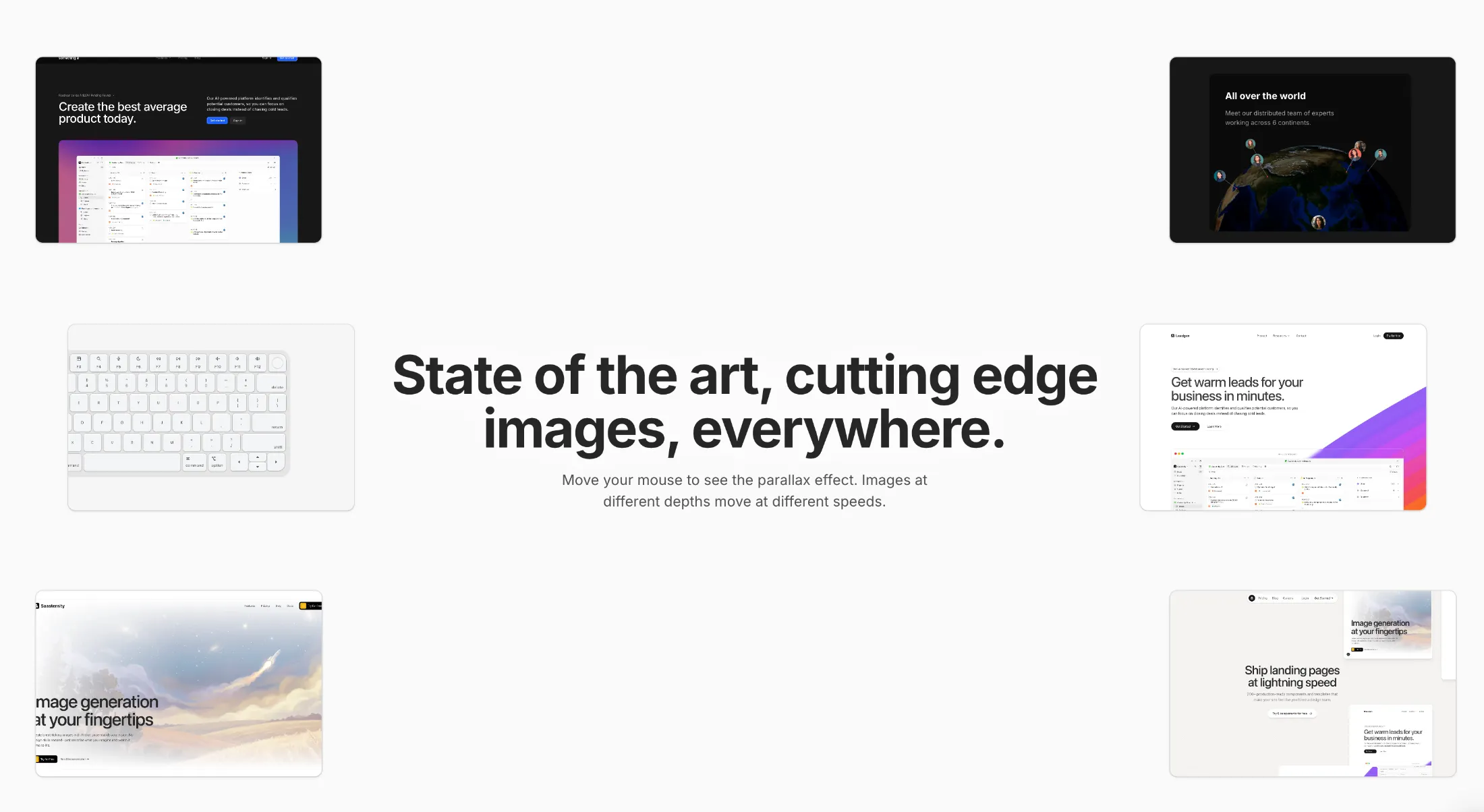
I made this $10,000 website with one prompt over the weekend… Just joking. I made another mock-up webpage for fun using one main prompt and a few smaller prompts to adjust it. It mostly cost me some time and about 1% of my weekly Antigravity credits. I got the idea for the salivating dog swirling up its food from an image I saw, and I decided to turn it into an animated web concept. I am going to keep posting random ideas like this because I make something new almost every day. As usual, I created it with Gemini, Google Flow, and Antigravity. At the end, I asked Antigravity to write a reusable prompt for creating a smooth, mouse-scroll-animated website hero section like this again. Here is the prompt it gave me ↓ --------------------------------------------------- I want to build a premium, scroll-driven frame animation (scrollytelling) hero section in vanilla HTML, CSS, and JavaScript. The image frames are located in a folder named 'frames' and are numbered sequentially from 'frame_005.jpg' to 'frame_181.jpg' (replace with your specific file names and range). Please implement this using the following high-performance frontend mechanics to ensure it is buttery-smooth, responsive, and has zero white flashes on loading/scrolling: 1. HTML5 Canvas Cover Sizing & DPI Scaling: - Use an HTML5 `<canvas>` element pinned inside a sticky viewport container (`position: sticky; height: 100vh; top: 0;`). - Dynamically scale the canvas width and height in JS using `window.devicePixelRatio` to keep drawings crisp on high-DPI (Retina) screens. - Implement "cover" scaling coordinates inside the drawing loop so the frames fill the viewport and crop centered, behaving like CSS `object-fit: cover`. 2. Double-Queue Progressive Asset Preloader: - Create a loading screen. To prevent the page from locking up on download, split frame loading into two queues: a) Priority Queue: Preload only every 5th frame (e.g., index 5, 10, 15, ..., 181). Once this priority batch is loaded, hide the preloader screen and launch the page instantly. b) Background Queue: After launching, load the remaining intermediate frames asynchronously in small batches (e.g., batches of 4 with a 50ms delay) to avoid choking the browser network. 3. Outward Neighbor Fallback Search: - While scrolling, if the render loop requests a frame index that hasn't finished downloading yet, search the image cache array outward (check index-1, index+1, index-2, index+2, etc.) and draw the closest available loaded frame. This guarantees a fluid experience with zero visual flashing or black frames during initial scrolls. 4. Linear Interpolation (Scroll Lerping): - Track `targetFrame` based on scroll progress, and use a separate float `currentFrame` that smoothly glides toward `targetFrame` in a `requestAnimationFrame` loop. - Use linear interpolation (lerp): `currentFrame += (targetFrame - currentFrame) * 0.08` (tweak coefficient for slide speed). - Only trigger canvas draws when the difference is greater than 0.001 to minimize CPU usage when the user stops scrolling. 5. Responsive Design & Glassmorphic Overlays: - Overlay structured text narrative cards that fade in/out at specific scroll ranges. - Build a vertical scroll progress timeline indicator dot grid on the right side that highlights the active section and scrolls to it smoothly on click.
A webpage case by @uxsweta using AI UI Builder, including the public result, full prompt, and original source.
Prompt
Few people asked for the prompt, so here it is 👇 PS: Tweak it based on your use case. Create a modern, minimal 3D Invoice Generator Machine component with a premium SaaS-style aesthetic. Visual Design - Design a wide, horizontal invoice printing machine inspired by receipt printers, but with a futuristic and clean appearance. - Use subtle gray strokes, soft shadows, and minimal details. - The machine should feel premium, lightweight, and modern rather than realistic or industrial. - Keep the overall design clean enough to fit inside a dashboard or landing page hero section. - Add a single prominent "Print Invoice" button directly on the machine. Animation When the user clicks the "Print Invoice" button: - The machine should react with a subtle press/click animation. - A receipt should gradually emerge from the printer slot. - The receipt must animate smoothly from inside the machine to outside, giving the impression that it is being physically printed. - The animation should feel realistic, fluid, and satisfying. - The receipt should slide out line-by-line rather than appearing instantly. - Add slight motion easing and subtle paper movement for realism. Receipt Design The receipt should remain highly minimal and editable. Do NOT fill it with complex customer information. Use placeholder content such as: Customer Name Product Total Amount The receipt should look like a clean invoice preview rather than a detailed bill. Interaction - The receipt should be hidden initially. - It should only appear after clicking the Print Invoice button. - The animation should be repeatable every time the user clicks the button. - Include smooth transitions and micro-interactions throughout. Style References Apple-style minimalism Linear / Stripe design quality Premium SaaS dashboard aesthetic Soft gray strokes Clean typography Modern 3D illustration High attention to interaction details Goal: Create a delightful visual experience where users feel like an invoice is actually being generated and printed from a beautiful 3D machine, rather than simply appearing on the screen.
A web case by @ianiketnagapure created with Claude Sonnet 5 · Cursor, including the public result, full prompt, and original source.
Prompt
Tried Sonnet 5(high) on cursor Prompt: "Build a production-quality, cinematic FIFA World Cup website with realistic visuals, match schedules, immersive animations, and premium UI/UX" Here’s what happened 👇 On the first try It made a decent dashboard with matches, standings and fixtures… but it’s nothing fancy yet. Image generation didn’t work (as expected), so I told it to grab whatever images it could. Still testing how good this new model actually is.What should I test next with Sonnet 5? Drop your ideas👇
A webpage case by @Oluwaphilemon1 using Claude Fable 5 · Three.js · Blender · GSAP, including the public result, full prompt, and original source.
Prompt
Claude Fable 5 and GPT-5.6 are powerful🥵🥵🥵 Here Is How I built with Claude 👇 Prompt: "Design an agency site where services are presented as supermarket product packaging in 3D" Use Three.js with WebGL to render all products in real time in the browser Use Blender to model the packaging then export as GLTF to load in Three.js Use GSAP for the smooth product rotation and hover interactions Save this if you want a portfolio that makes clients feel they are buying something premium 🛒
A web case by @aaryan_kakad using Kimi K2.5 Agent, including the public result, full prompt, and original source.
Prompt
Here's the prompt I used: Create a world-class, award-worthy website about humanity's urgent need for multiplanetary civilization. This must be the most visually stunning, emotionally compelling, and technically sophisticated website ever built on this topic. Core Message Present the existential case: There is a 1-in-1,000 chance every century that a catastrophic astronomical event (asteroid impact, gamma-ray burst, solar flare, supernova radiation) could cause human extinction. Our survival for the next thousand years depends on becoming a multiplanetary species. Visual & Technical Requirements Hero Section Epic animated background: Rotating Earth view transitioning to asteroid field, then Mars, then distant exoplanets Particle effects: Floating space dust, stars with parallax scrolling at multiple depths Dynamic countdown: Real-time probability calculator showing extinction risk accumulating Cinematic title reveal: Text that materializes from star particles with glowing edges Ambient sound option: Low, cosmic hum with toggle (space ambience) Animation & Effects Library Scroll-triggered animations: GSAP ScrollTrigger for every section 3D elements: Three.js rotating planets, orbital mechanics visualizations WebGL shaders: Atmospheric effects, nebula backgrounds, light refraction Lottie animations: Smooth vector animations for infographics Mouse-reactive particles: Interactive particle systems that respond to cursor Smooth page transitions: Barba.js or similar for seamless navigation Reveal animations: Intersection Observer for fade-ins, slide-ins, scale effects Number counters: Animated statistics that count up when visible Morphing SVGs: Icons and graphics that transform between states Glassmorphism UI: Frosted glass effects for cards and containers Sections to Include THE THREAT (Dark, ominous tone) Animated timeline of past extinction events (dinosaurs, etc.) Interactive probability calculator Visualization of near-miss asteroids in Earth's history Real NASA data on potentially hazardous objects Countdown showing risk accumulation in real-time THE SOLUTION (Hope, wonder, inspiration) Interactive solar system map showing colonization targets Mars terraforming visualization (animated progression) Orbital habitat concepts with 3D models Technology roadmap with milestone animations THE SCIENCE Animated explanations of each extinction threat Data visualizations of impact probabilities Expert quotes with elegant typography Video backgrounds of space phenomena THE VISION Futuristic city concepts on Mars/Moon (3D renders) Multi-generational ship designs Timeline to 3025: humanity across the stars Interactive galaxy map showing expansion potential TAKE ACTION How individuals can contribute Organizations to support Educational resources Shareable content generator Technical Stack Specifications Frontend Framework: React or Next.js for component architecture TypeScript for type safety Animation Libraries: GSAP (GreenSock) for premium animations Three.js for 3D graphics Framer Motion for React animations Lottie for vector animations Anime.js for additional effects Visual Effects: WebGL shaders (custom or Shadertoy imports) Canvas API for particle systems CSS3 advanced animations (keyframes, transforms) SVG morphing and path animations UI/UX Features: Smooth scrolling (Locomotive Scroll or Lenis) Lazy loading for performance Progressive image loading with blur-up effect Responsive design (mobile-first) Dark theme with cosmic color palette Custom cursor effects Preloader with percentage counter Easter eggs (hidden animations on clicks) Design Principles Color Palette: Deep space blacks (#0a0a0f) Cosmic blues (#1a2a6c, #2e3192) Mars reds (#c1440e, #8b0000) Stellar whites and golds for accents Gradient overlays everywhere Typography: Futuristic sans-serif for headings (Orbitron, Exo 2, Space Grotesk) Readable serif or clean sans for body (Inter, Work Sans) Glowing text effects on key phrases Kinetic typography animations Imagery: NASA high-resolution images ESA space photography SpaceX renders Custom illustrations Video backgrounds (cosmic phenomena, rocket launches) Depth-of-field blur effects Micro-interactions: Button hover effects (glow, particle burst) Card flip animations Ripple effects on clicks Floating/hovering elements Magnetic hover effects (elements attracted to cursor) Sound effects on interactions (optional) Advanced Features Interactive Data Visualizations D3.js charts showing extinction probabilities Animated infographics on resource distribution Timeline sliders for future projections 3D Model Viewer Rotatable spacecraft models Mars base walkthroughs Asteroid size comparisons Parallax Storytelling Multi-layer parallax scrolling Horizontal scroll sections Zoom transitions between sections Dynamic Content Real-time asteroid tracking data (NASA API) Live space mission updates Social media integration Immersive Elements VR/360° views (optional) Augmented reality previews (WebXR) Full-screen video backgrounds Atmospheric audio tracks Performance Optimization Code splitting for faster load times Image optimization (WebP, AVIF formats) Lazy loading for heavy animations Efficient WebGL rendering Cache strategies CDN delivery Emotional Journey Structure the narrative to take users through: Shock → See the real threat Fear → Understand what we could lose Wonder → Discover the possibilities Hope → See the solution Determination → Feel compelled to act Call-to-Actions "Join the Movement" (newsletter signup with particle burst effect) "Support Space Exploration" (donation/advocacy links) "Share Our Future" (social sharing with custom preview cards) "Learn More" (resource library) Unique Differentiators No generic templates - 100% custom design Award-quality animations - Smooth 60fps throughout Scientifically accurate - All data verified Emotionally resonant - Story-driven experience Technically flawless - No bugs, perfect responsiveness Accessible - WCAG compliant while maintaining visual impact Final Instructions Build this as if it's for NASA, SpaceX, and the United Nations combined. Every pixel should inspire awe. Every animation should feel intentional and meaningful. Every interaction should delight. This isn't just a website—it's a manifesto for human survival, a rallying cry for our species, and a work of digital art that makes people feel the urgency and possibility of our multiplanetary future. Make it so compelling that anyone who visits will become an advocate for space colonization. GO ALL IN. SPARE NO CREATIVE EFFORT. THIS IS HUMANITY'S STORY.
A web case by @MercyDeGreat using ChatGPT · AI Website Builder, including the public result, full prompt, and original source.
Prompt
Firstly the image I generated the image I used for this on ChatGPT Here is the prompt for the design: Create an ultra-premium cinematic AAA game landing page mockup inspired by the visual identity, atmosphere, luxury, and neon-crime aesthetic of Grand Theft Auto VI. Landscape 16:9 composition. Design it as if it were the official Rockstar Games reveal website. The hero section fills the entire screen with two protagonists sitting on the hood of a black American muscle car. The male protagonist sits confidently in the foreground wearing a white tank top, holding a pistol naturally at his side. The female protagonist leans against him from behind wearing a bright pink cropped long-sleeve top and blue camouflage leggings, maintaining a confident expression. Preserve realistic proportions and facial anatomy. Behind them is a breathtaking Vice City skyline during golden hour transitioning into neon nightlife. Include: glowing skyscrapers palm trees Ocean Drive luxury hotels tropical atmosphere ocean reflections warm sunset purple clouds pink and orange sky luxury cars subtle police lights helicopter with spotlight cinematic haze volumetric lighting realistic reflections neon signs wet pavement luxury Miami ambience The left side contains premium website content. Large GTA-inspired stacked logo reading: GRAND THEFT AUTO VI with authentic Rockstar-inspired typography and vibrant pink-to-orange gradient “VI”. Below it: “The Next Criminal Empire Begins.” Elegant handwritten italic typography with subtle neon glow. Below the headline are two modern glassmorphism buttons. Primary button: Play Now Neon pink gradient. Secondary button: Watch Trailer Dark glass button with play icon. Top navigation: Home Story Characters Gameplay Media News Top-right: Premium outlined glass button: Pre-order Now Below the hero text are floating glassmorphism information cards featuring: Release Date Platforms Social Links Latest News Each card uses: frosted glass backdrop blur rounded corners subtle reflections premium shadows luxury spacing Bottom right features a modern floating music player. Use Apple’s Human Interface aesthetic combined with Rockstar Games branding. Color palette: Neon Pink Sunset Orange Deep Purple Ocean Blue Black White Lighting should feature: cinematic rim lighting global illumination HDR lighting realistic bloom lens flare atmospheric perspective soft depth of field premium color grading The UI should feel handcrafted, luxurious, modern, minimal, and award-winning. No generic web templates. No clutter. Every element should feel intentional and polished. Ultra-detailed, photorealistic digital illustration, AAA concept art, cinematic composition, Unreal Engine 5 quality, Octane Render, 8K, premium UI/UX presentation, luxury game reveal website, masterpiece.
A web case by @EHuanglu using HeroUI, including the public result, full prompt, and original source.
Prompt
trick 4: website for filmmakers you can use this prompt to generate a artistic website for filmmakers Website link: prompt: Create an artistic and cinematic portfolio website for a film director. The homepage should feature a fullscreen background video or image montage from their films, with dramatic lighting and moody tones. Include the director’s name in bold serif typography, with a short tagline like “Telling Stories Through Light and Silence.” Add a section for featured films with posters or stills, and each project should open to a full-page case study with trailer, synopsis, director’s note, and behind-the-scenes photos. Include an “About” section with a poetic bio and a black-and-white portrait. Add a “Press & Awards” section with logos of film festivals and quotes from reviews. Include a contact form at the bottom with cinematic transitions, and add subtle sound effects or ambient music as optional. The overall style should be minimal, modern, and emotional—dark theme, slow animations, strong visual storytelling. Mobile-responsive and smooth scrolling required.
A website case by @givros made with Codex · GPT-5.6 Ultra · Blender · Three.js, including the public result, full prompt, and original source.
Prompt
You are an expert Blender architectural artist, procedural 3D modeler, Python developer, and Three.js developer. Your task is to recreate the exact same traditional Chinese temple shown in the attached multi-view reference image, then build an interactive web page that displays the final 3D model and allows the user to inspect it from every angle. The attached image is the primary source of truth. It contains multiple views of the same temple, including front, rear, side, top-down, and three-quarter perspective views. Cross-reference all visible views continuously so the final result is one coherent building that matches the reference from every angle. Do not create a generic Chinese temple merely inspired by the image. Reproduce this specific temple as faithfully as possible, including: - Overall proportions. - Building footprint. - Two-level structure. - Roof silhouettes. - Roof curvature. - Roof overhangs. - Column layout. - Window and door placement. - Stone foundation. - Stair placement. - Railings. - Decorative elements. - Colors. - Materials. - Architectural rhythm. The final result must be a complete, editable 3D model and a working interactive web viewer. # CRITICAL BLENDER EXECUTION RULE Blender must be used exclusively through the terminal. Do not interact manually with the Blender graphical interface. Do not use: - Manual viewport manipulation. - Mouse-based modeling. - Manual object placement. - Manual material editing. - Manual modifier configuration. - Manual camera placement. - Manual rendering. - Manual exporting. - Any GUI-based Blender workflow. Do not ask the user to perform manual steps inside Blender. All Blender operations must be performed using Python scripts executed from the terminal. Use Blender in background mode whenever possible: ```bash blender --background --python scripts/build_temple.py
A website case by @sergey_moloman created with GPT-5.6 Pro · Three.js, including the public result, full prompt, and original source.
Prompt
GPT 5.6 Pro has pretty nice frontend capabilities! I decided testing frontend abilities because it was the "ouch" moment of ChatGPT since GPT 5.2 I used to pay Claude Max x5 before, just to create some nice frontends. Not anymore! Here are 3 examples of landing pages, one shot. Generated via ChatGPT website. 1. Orbital space tourism landing page Prompt: "Build a cinematic landing page for a private space tourism company called Orbital North. Use a full-bleed Three.js scene with Earth/orbit/starfield visuals. As the user scrolls, camera position, lighting, and content sections should change. The landing page should feel immersive and premium, with real product/service information, itinerary, safety section, pricing teaser, and booking CTA. Avoid generic gradients, decorative orbs, and marketing filler. The first screen must immediately communicate space travel."
A webpage case created by @sergey_moloman with GPT-5.6 Pro · Three.js, including the public result, full prompt, and original source.
Prompt
2. Fashion house landing page Prompt: "Create an experimental landing page for a fictional digital fashion house called VEIL/FIELD. This should feel like an interactive editorial spread, not a product SaaS page. Use Three.js to create a surreal cloth, mirror, or liquid-metal scene where typography and 3D forms overlap in a high-fashion composition. The user scrolls or moves the pointer to distort fabric, reveal collection names, and transition between looks. Visual direction: avant-garde, editorial, fashion magazine, strange but polished. Large typography, asymmetry, negative space, art-directed composition. Requirements: - Three.js or react-three-fiber - cloth/liquid/mirror-like shader or convincing procedural material - unconventional layout - collection/product reveal - purchase or waitlist CTA - mobile version that still feels designed - no dashboard UI - no industrial/CAD look - no playful toy physics - verify with screenshots and fix layout overlaps"
A website case by @shushant_l created with AI Website Builder, including the public result, full prompt, and original source.
Prompt
Here's how to create your Netflix style personal portfolio website with AI. Use this prompt: Design a cinematic personal portfolio website inspired by the visual language of Netflix, but reimagined with a futuristic 3D aesthetic. Use a dark luxury interface with immersive depth, glassmorphism, floating 3D cards, dynamic lighting, smooth parallax scrolling, animated gradients, holographic effects, and ultra-premium microinteractions. The homepage should feature a massive hero section with a bold personal brand statement, followed by Netflix-style horizontal content rows showcasing projects, case studies, skills, achievements, testimonials, and career milestones as interactive 3D tiles that expand into rich full-screen experiences on hover or click. Include cinematic transitions, AI-inspired visuals, subtle motion graphics, realistic shadows, glowing accents, and visually striking typography. Make every section feel highly engaging, viral, attention-grabbing, and designed to maximize the wow factor, while maintaining excellent usability, responsiveness, and a polished modern luxury aesthetic suitable for a top-tier creator, entrepreneur, or tech professional. Check the attached image of Netflix website for design inspiration. Add your information in your prompt to create the portfolio website customised for you. I've created this with Replit, but you can create it with other AI website builder tools and AI models/LLMs.
A website case by @Oluwaphilemon1 made with Claude · Three.js · GSAP, including the public result, full prompt, and original source.
Prompt
How I built with Claude 👇 1. Prompt: "Build a storytelling website where each scroll section reveals a new chapter with fluid color transitions" 2. Use Three.js for the painted texture background that reacts to cursor 3. Prompt: "Add GSAP ScrollTrigger so each section animates in as a cinematic scene" 4. Use Lenis.js for that buttery smooth scroll that premium sites have