Loading…
Creator · Aceternity UI
View original source ↗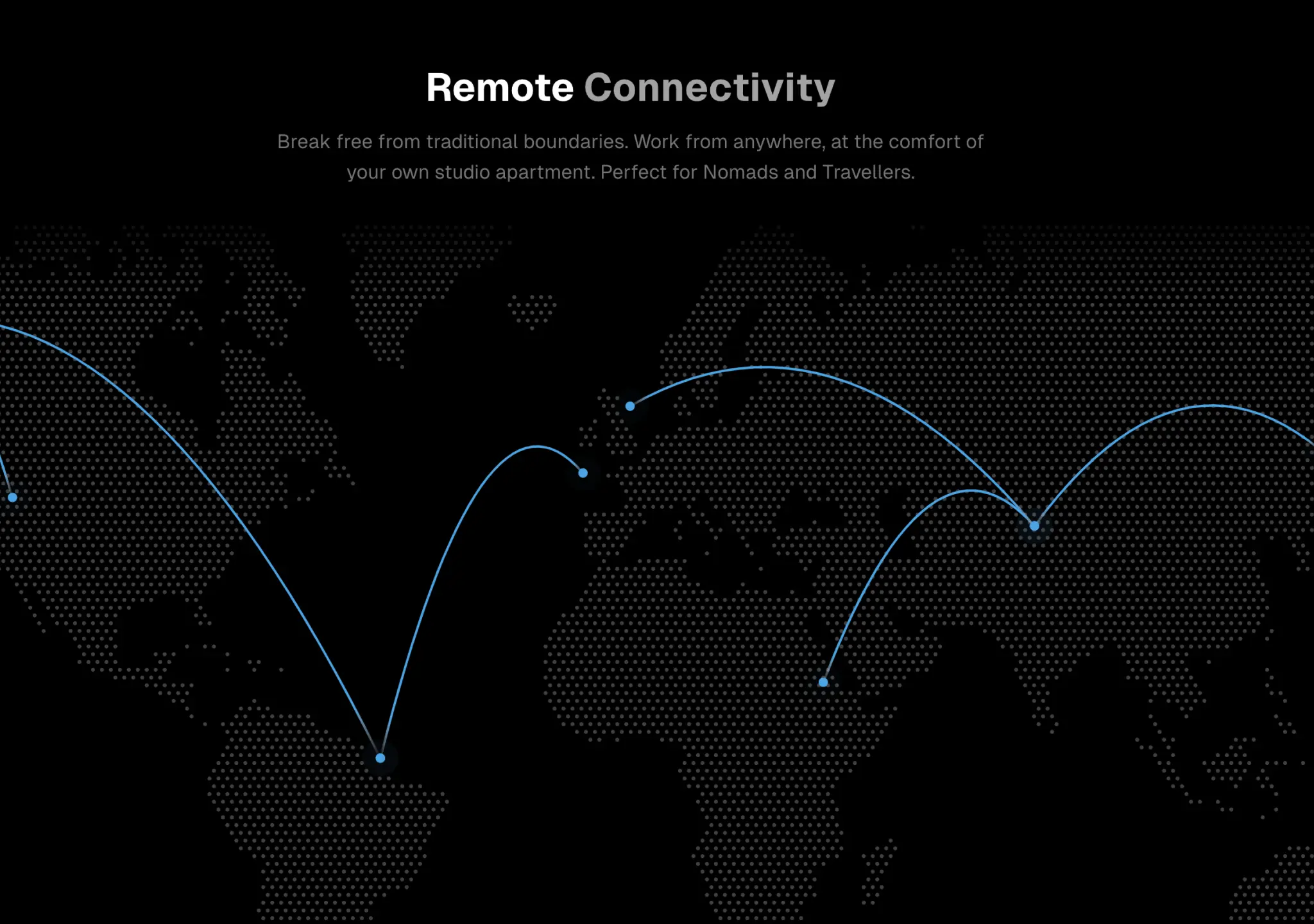
Prompt
// components/ui/world-map.tsx
"use client";

import { useRef } from "react";
import { motion } from "motion/react";
import DottedMap from "dotted-map";

import { useTheme } from "next-themes";

interface MapProps {
  dots?: Array<{
    start: { lat: number; lng: number; label?: string };
    end: { lat: number; lng: number; label?: string };
  }>;
  lineColor?: string;
}

export default function WorldMap({
  dots = [],
  lineColor = "#0ea5e9",
}: MapProps) {
  const svgRef = useRef<SVGSVGElement>(null);
  const map = new DottedMap({ height: 100, grid: "diagonal" });

  const { theme } = useTheme();

  const svgMap = map.getSVG({
    radius: 0.22,
    color: theme === "dark" ? "#FFFFFF40" : "#00000040",
    shape: "circle",
    backgroundColor: theme === "dark" ? "black" : "white",
  });

  const projectPoint = (lat: number, lng: number) => {
    const x = (lng + 180) * (800 / 360);
    const y = (90 - lat) * (400 / 180);
    return { x, y };
  };

  const createCurvedPath = (
    start: { x: number; y: number },
    end: { x: number; y: number }
  ) => {
    const midX = (start.x + end.x) / 2;
    const midY = Math.min(start.y, end.y) - 50;
    return `M ${start.x} ${start.y} Q ${midX} ${midY} ${end.x} ${end.y}`;
  };

  return (
    <div className="w-full aspect-[2/1] dark:bg-black bg-white rounded-lg  relative font-sans">
      <img
        src={`data:image/svg+xml;utf8,${encodeURIComponent(svgMap)}`}
        className="h-full w-full [mask-image:linear-gradient(to_bottom,transparent,white_10%,white_90%,transparent)] pointer-events-none select-none"
        alt="world map"
        height="495"
        width="1056"
        draggable={false}
      />
      <svg
        ref={svgRef}
        viewBox="0 0 800 400"
        className="w-full h-full absolute inset-0 pointer-events-none select-none"
      >
        {dots.map((dot, i) => {
          const startPoint = projectPoint(dot.start.lat, dot.start.lng);
          const endPoint = projectPoint(dot.end.lat, dot.end.lng);
          return (
            <g key={`path-group-${i}`}>
              <motion.path
                d={createCurvedPath(startPoint, endPoint)}
                fill="none"
                stroke="url(#path-gradient)"
                strokeWidth="1"
                initial={{
                  pathLength: 0,
                }}
                animate={{
                  pathLength: 1,
                }}
                transition={{
                  duration: 1,
                  delay: 0.5 * i,
                  ease: "easeOut",
                }}
                key={`start-upper-${i}`}
              ></motion.path>
            </g>
          );
        })}

        <defs>
          <linearGradient id="path-gradient" x1="0%" y1="0%" x2="100%" y2="0%">
            <stop offset="0%" stopColor="white" stopOpacity="0" />
            <stop offset="5%" stopColor={lineColor} stopOpacity="1" />
            <stop offset="95%" stopColor={lineColor} stopOpacity="1" />
            <stop offset="100%" stopColor="white" stopOpacity="0" />
          </linearGradient>
        </defs>

        {dots.map((dot, i) => (
          <g key={`points-group-${i}`}>
            <g key={`start-${i}`}>
              <circle
                cx={projectPoint(dot.start.lat, dot.start.lng).x}
                cy={projectPoint(dot.start.lat, dot.start.lng).y}
                r="2"
                fill={lineColor}
              />
              <circle
                cx={projectPoint(dot.start.lat, dot.start.lng).x}
                cy={projectPoint(dot.start.lat, dot.start.lng).y}
                r="2"
                fill={lineColor}
                opacity="0.5"
              >
                <animate
                  attributeName="r"
                  from="2"
                  to="8"
                  dur="1.5s"
                  begin="0s"
                  repeatCount="indefinite"
                />
                <animate
                  attributeName="opacity"
                  from="0.5"
                  to="0"
                  dur="1.5s"
                  begin="0s"
                  repeatCount="indefinite"
                />
              </circle>
            </g>
            <g key={`end-${i}`}>
              <circle
                cx={projectPoint(dot.end.lat, dot.end.lng).x}
                cy={projectPoint(dot.end.lat, dot.end.lng).y}
                r="2"
                fill={lineColor}
              />
              <circle
                cx={projectPoint(dot.end.lat, dot.end.lng).x}
                cy={projectPoint(dot.end.lat, dot.end.lng).y}
                r="2"
                fill={lineColor}
                opacity="0.5"
              >
                <animate
                  attributeName="r"
                  from="2"
                  to="8"
                  dur="1.5s"
                  begin="0s"
                  repeatCount="indefinite"
                />
                <animate
                  attributeName="opacity"
                  from="0.5"
                  to="0"
                  dur="1.5s"
                  begin="0s"
                  repeatCount="indefinite"
                />
              </circle>
            </g>
          </g>
        ))}
      </svg>
    </div>
  );
}Models & stability
Recommended models
Keep exploring

A webpage case by @Oluwaphilemon1 using Claude Fable 5 · Three.js · Blender · GSAP, including the public result, full prompt, and original source.
Prompt
Claude Fable 5 and GPT-5.6 are powerful🥵🥵🥵 Here Is How I built with Claude 👇 Prompt: "Design an agency site where services are presented as supermarket product packaging in 3D" Use Three.js with WebGL to render al
复制这段 TSX 组件源码,交给 Cursor、v0、Claude 等 AI 编程工具,说明这是「3D Animated Pin」的 Aceternity UI 组件实现,即可让它接入你的 React 项目,再按需替换文案、配色与触发参数复用。
Prompt
// components/ui/3d-pin.tsx "use client"; import React, { useState } from "react"; import { motion } from "motion/react"; import { cn } from "@/lib/utils"; export const PinContainer = ({ children, title, href, className, containerClassName…
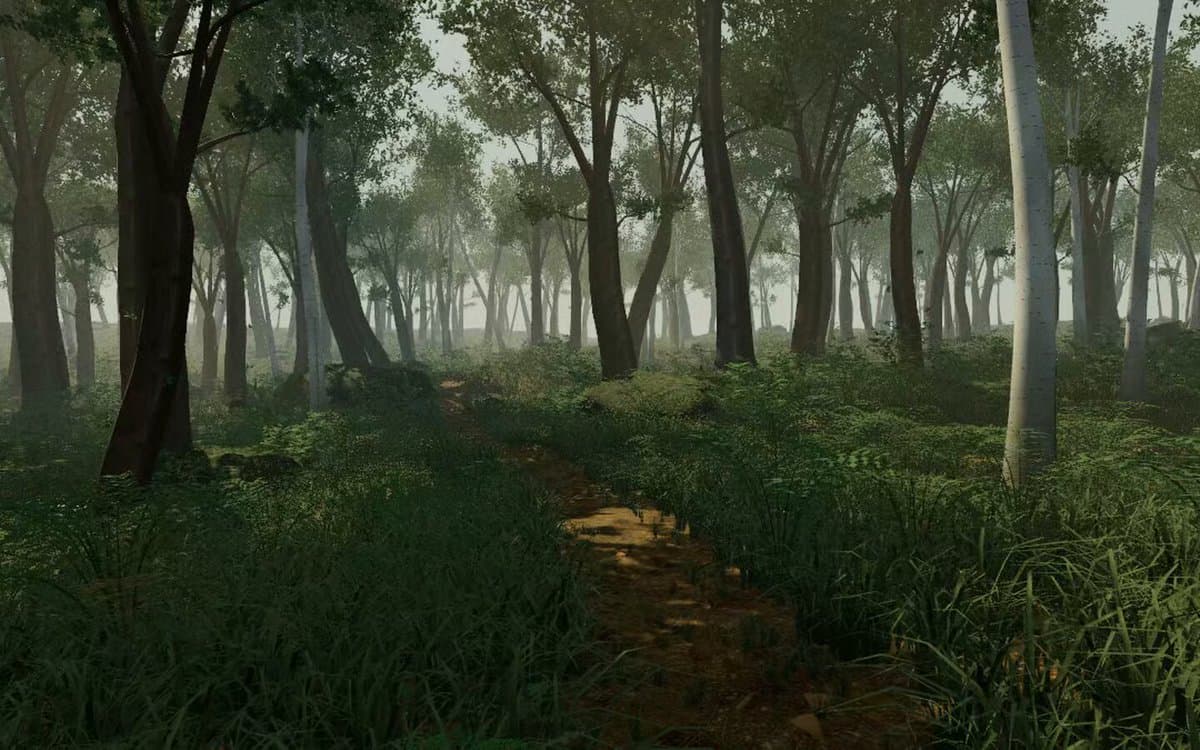
一个复杂的提示词,用于利用 Three.js 风格优化和逼真光照,在浏览器中生成精细的实时 3D 森林环境。
Prompt
First search for the "/unlazy" skill, read it fully, and use it throughout the entire task. Treat this as a major visual build lasting at least {argument name="minimum duration" d